Technology & consulting
Nian Infotech
A business website that explains Nian Infotech’s services and gives visitors a structured way to describe what they need.
About the business
and its website
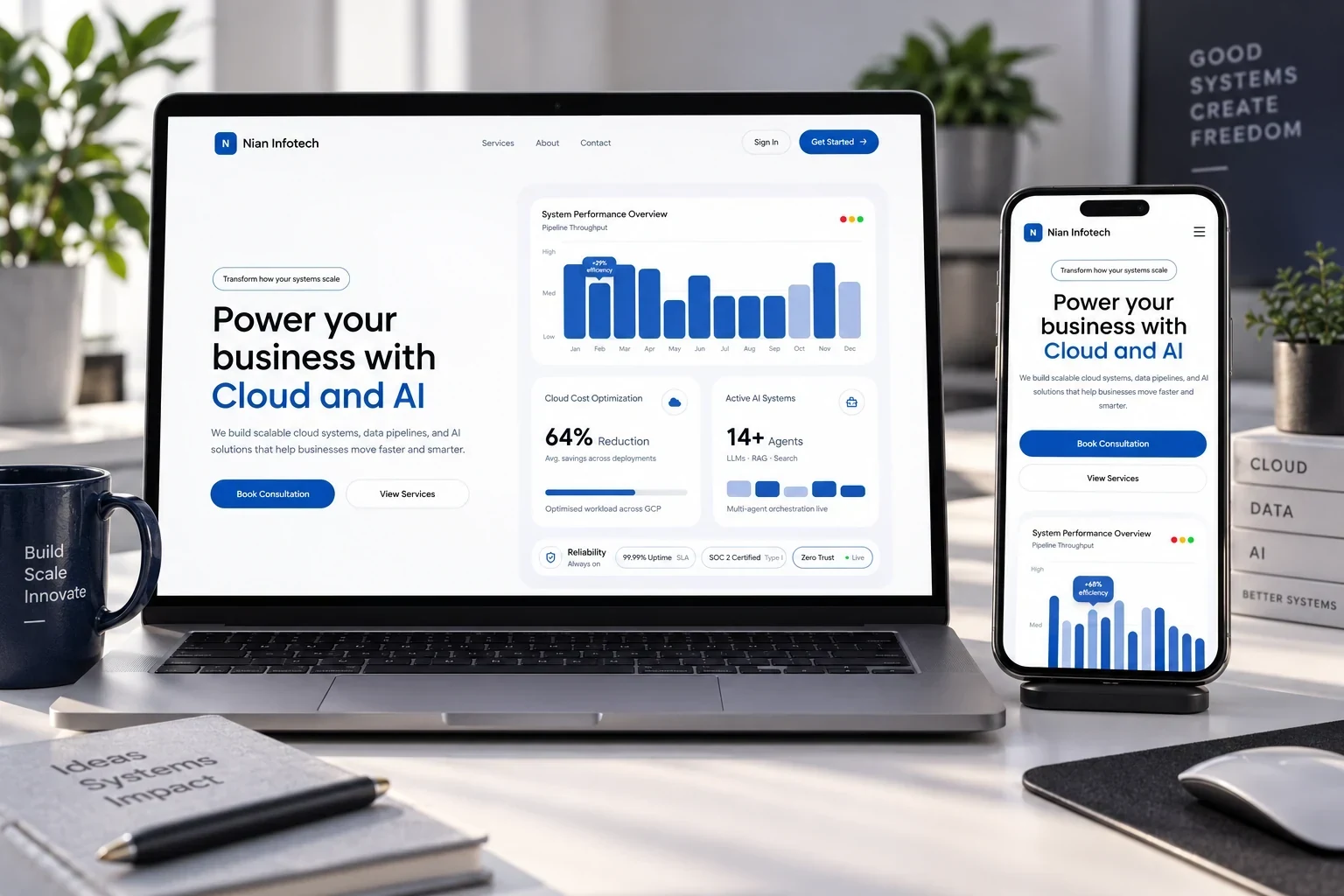
Nian Infotech presents services for businesses working with cloud systems, data, automation, and AI. A visitor does not need to understand all of those subjects to use the website. The pages introduce the areas of work, explain the services, and provide a place to describe a project.
The project contains a homepage, service information, a company introduction, and a contact page. These have different roles: the homepage gives a quick overview, the service page provides more detail, and the inquiry page gathers information for a conversation.
Understanding the offering
Separating the services into understandable groups.
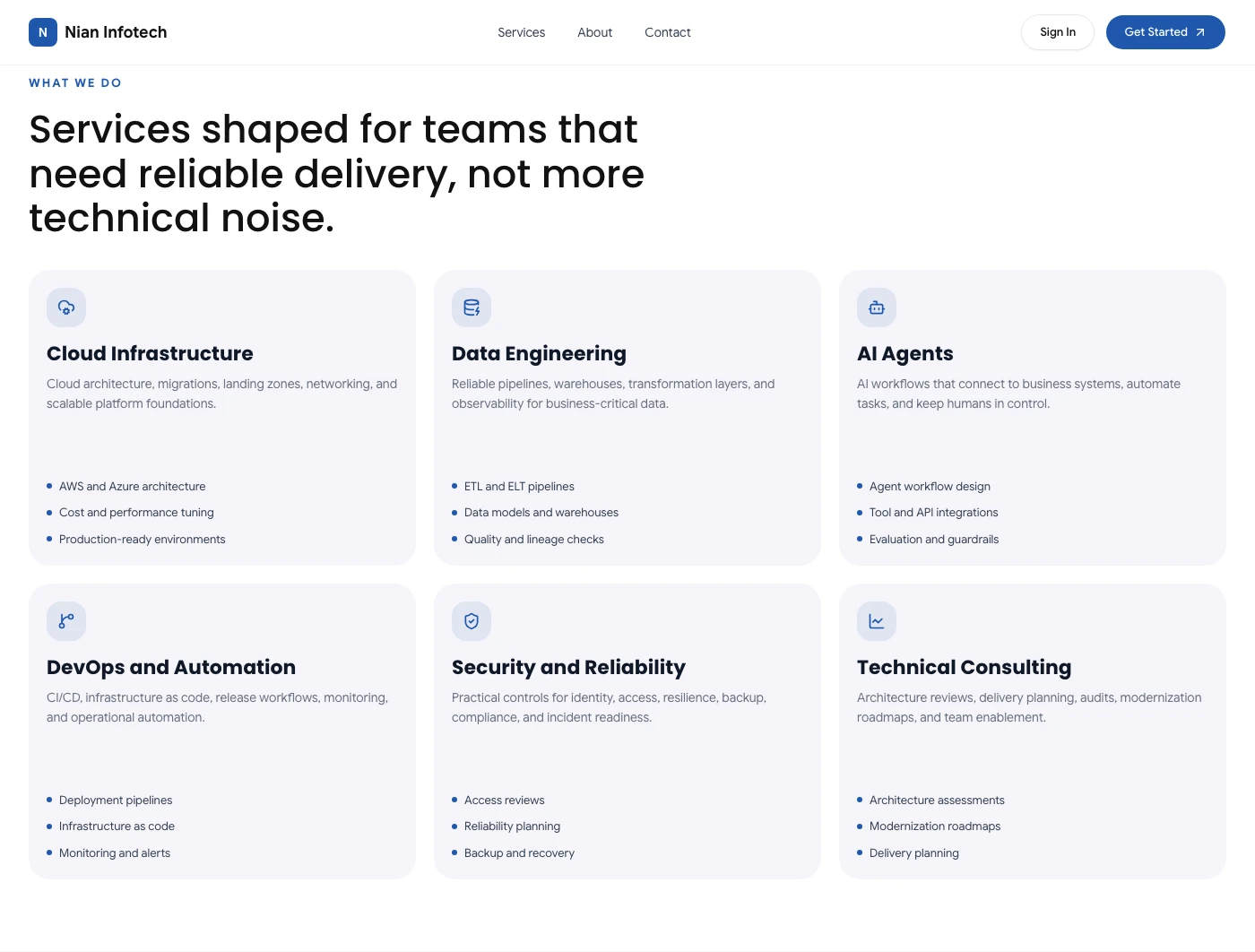
The service page groups the offering into six areas, including cloud infrastructure, data engineering, AI agents, operations and automation, security, and consulting. Each area has a short description and a smaller list of examples. Readers can scan the titles before deciding what to read in detail.
The grouping gives broad terms some context. For example, cloud work is described through business-system setup and improvement, while consulting includes reviews and planning. Readers can use those examples to decide which service they want to discuss.
Why this matters
A broad service list can be difficult to understand when every topic appears in one paragraph. Separate headings make it easier to identify an area of interest and bring a more specific question to the business.
Starting an inquiry
Helping a visitor explain their project.
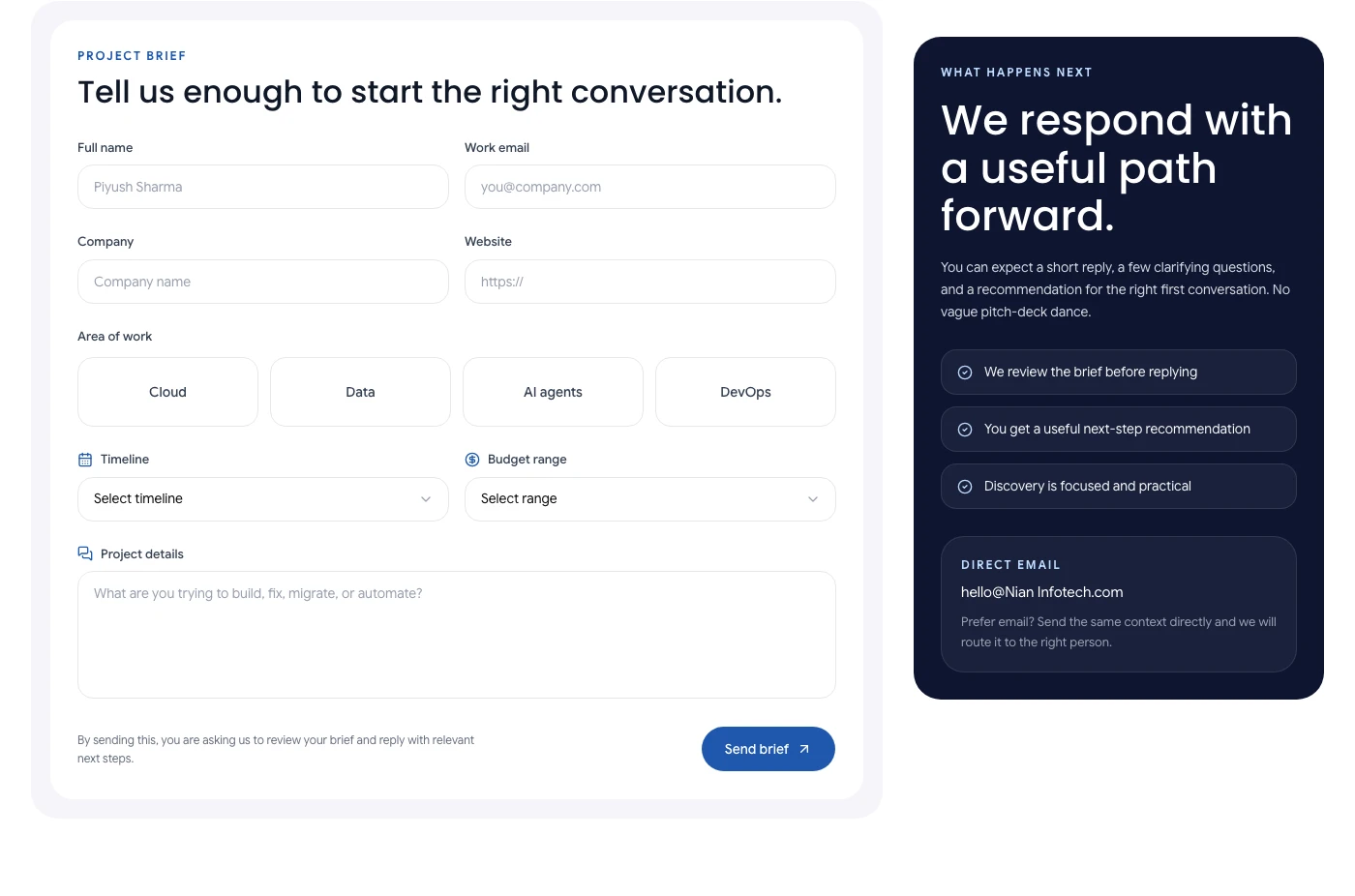
The contact page is designed around a project brief. It includes fields for a name, work email, company, and website, followed by choices for the area of work, timing, and budget. A larger message field gives space to describe the situation in the visitor’s own words.
This turns an open-ended “contact us” task into a set of smaller prompts. A person can give the basic context first, then add the details they know. The adjoining panel explains what the conversation is intended to cover and displays a direct email option.
Why this matters
Clear prompts can help a non-specialist begin an inquiry without knowing the right technical vocabulary. The form layout shows what information a visitor can prepare before talking to the business.
Why the website
looks this way
A direct opening message
The homepage introduces the business through a headline and short explanation. Visitors see the main areas of work before the supporting visuals.
Two clear starting points
The consultation and service actions give visitors a choice. Someone exploring can read further, while someone with a need can go toward contact.
A consistent page structure
The same blue-and-white appearance, headings, and navigation connect the homepage, services, and contact views. Readers do not have to relearn the layout on each page.
On a phone
Keep the message and next steps together.
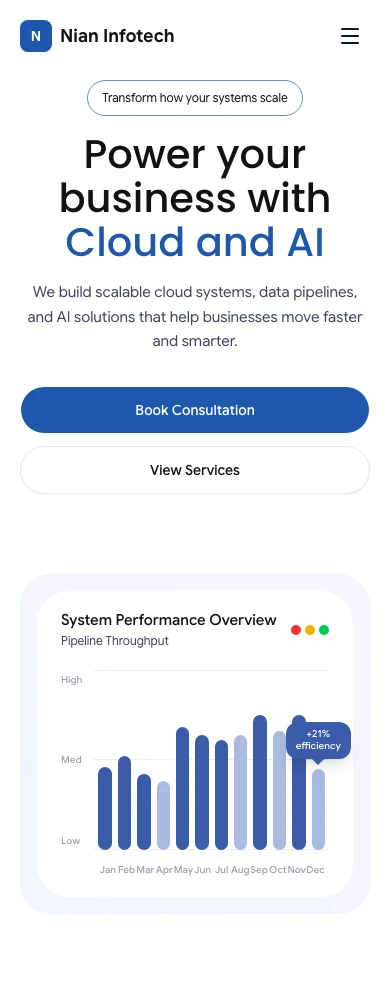
The mobile layout puts the introduction and both main actions near the top. The page then continues into its supporting content. Text and actions are arranged vertically rather than trying to squeeze the full desktop composition onto a narrow screen.
The primary consultation action remains visually different from the service exploration action. That distinction gives the two routes the same meaning on a phone as on a larger display. The supporting information follows below the main introduction.
What the website brings together
The project brings the company introduction, service explanations, and inquiry form design into one consistent website. It gives a visitor a path from understanding the business to choosing an area of interest and describing a project.
Included in the website
- Business introduction and service pages
- Company information and shared navigation
- Structured project inquiry form design
- Desktop and mobile presentations
A new conversation
Have something worth making?
Tell us where you want to go. We’ll help you work out what to build next.